
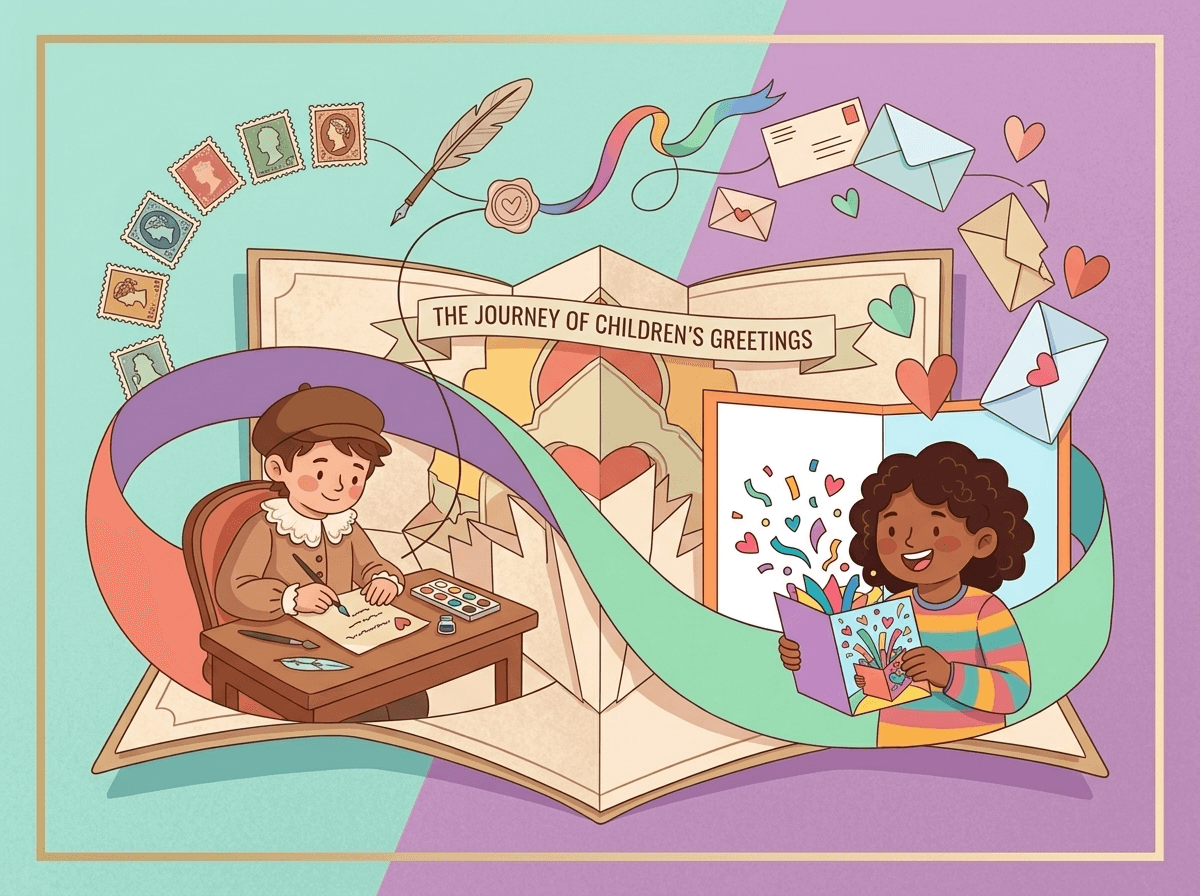
The tradition of sending greeting cards to children, and of children sending cards to loved ones, stretches back well over a century. By the Victorian era, advances in color printing and affordable postal services had made illustrated greeting cards a beloved part of family life. Children were both recipients and active participants in this tradition - especially at Christmas, birthdays, and Valentine's Day. Cards often featured animals, flowers, fairy-tale characters, and playful scenes designed to delight young audiences. By the early 20th century, the postcard had become an inexpensive and widely used way for parents, grandparents, and other relatives to send children a small, tangible token of affection - particularly when families lived far apart.
A Deliberate, Physical Ritual
Around 100 years ago, sending a card was a deliberate, physical act. An adult would purchase a brightly illustrated postcard, write a short personal message, affix a stamp, and mail it to a child - sometimes across the country. Children, meanwhile, often made their own cards using folded paper, drawings, cut-out decorations, and handwritten greetings, sometimes with the help of parents or teachers. These homemade creations were especially common for Mother's Day, Christmas, and birthdays.
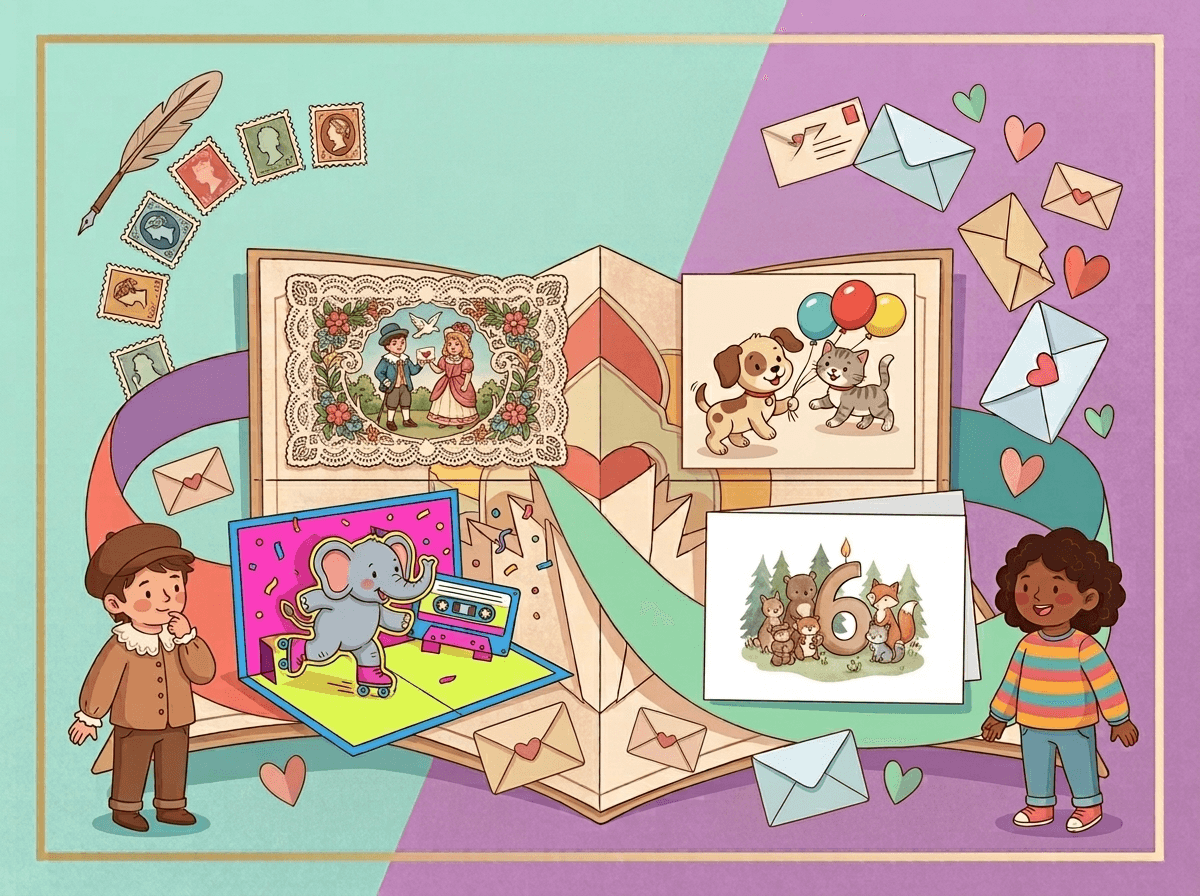
Unlike today's instant digital messages, a card could take days to arrive and was often kept as a treasured memento. What has remained remarkably consistent across all these years is the underlying purpose: giving children and the people who love them a simple, personal way to express affection and stay connected.
Historical Evidence
The Smithsonian Institution documents inexpensive Valentine's cards exchanged by schoolchildren around 1900. The Finnish Postal Museum also holds early-20th-century postcards specifically addressed to children, part of a collection of over 220,000 cards dating from the late 19th century to the present day.