
Unlike in previous generations where families often spent their entire lives living near one another, it has become common for grandparents to live far from their grandchildren. According to a 2018 AARP study, the majority of American grandparents have a grandchild who lives at least several hours drive away from them. The good news, though, is that technology can help families bridge the gap that distance can create.
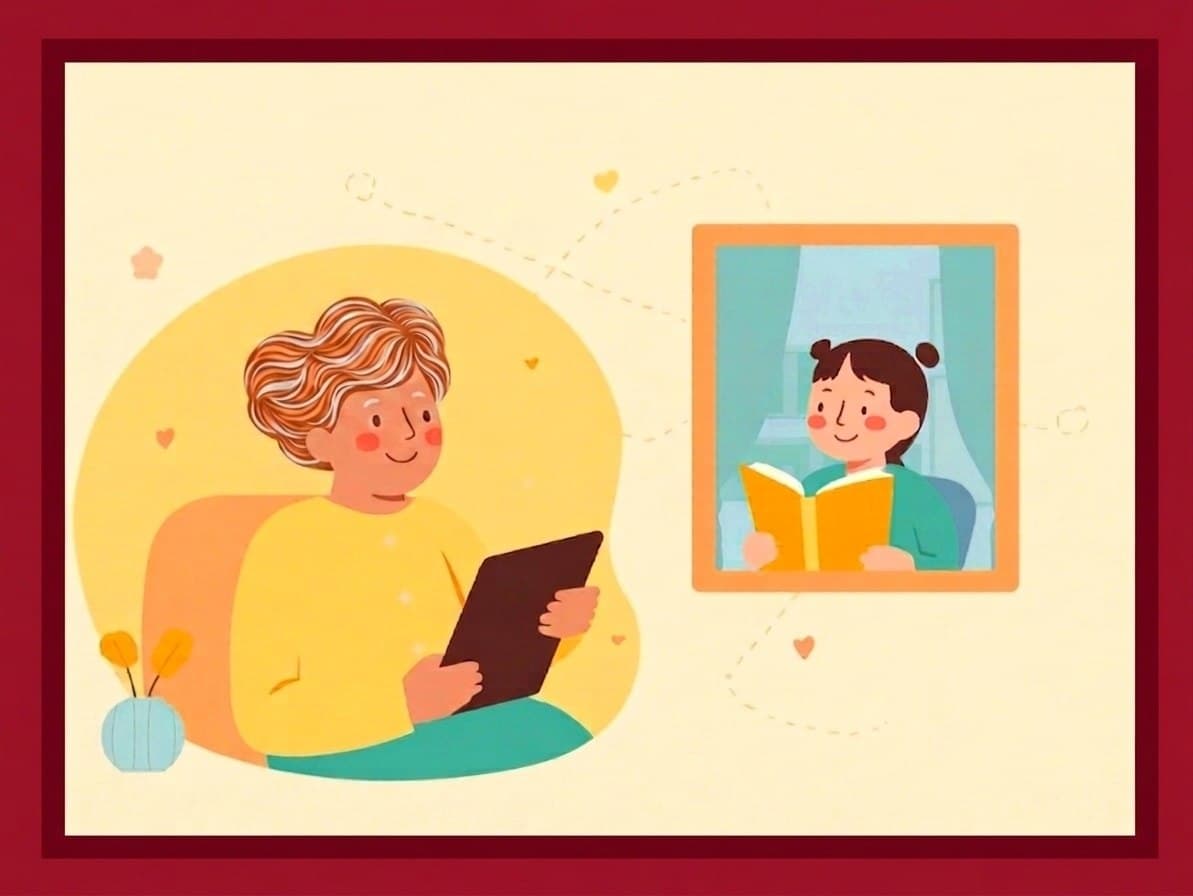
Why video chat works
Video calls are a great way to build and maintain relationships with children who you can't see in person. What makes video chat effective and engaging is that each party can react to the other in real time using language, gestures, and eye contact. These socially contingent behaviors are essential for children's engagement and they are closely tied to their learning. In fact, because video chat allows for genuine social interaction, the American Academy of Pediatrics and other organizations do not classify it as "screentime" that should be avoided or restricted.
Video chat not only helps children learn, but it can also help children form social connections. In one study, toddlers who interacted with a researcher over several video chat sessions not only recognized that person when they finally met face-to-face, but they also chose them over a new person as a playmate. This means that when children get to know their grandparents through video chat and then they finally get to see them in person, they feel like family and not like strangers.
Although children may already be familiar with devices like tablets and smartphones, the adults in their homes - and the adults who want to connect with them online - can help make it a meaningful and fun experience for all by doing several things.
How to set up a great call
First, pick devices, times, and locations that will help get and keep children's attention on the call. If possible, have the child use a device with a large screen, like a laptop or tablet, rather than a phone. If a phone is the only option, put it in a fixed, stable spot (not the child's hand!). Aim to have arms and hands in view of the camera, too.
It's also important to pick a good time for a video chat and potentially make it part of a routine. If the child is used to sitting in one place at a certain time, for example, sitting at the table for a meal, then it will be easier to keep them there during the call. Avoid times when the child is tired or the family is rushed. It is also essential that the video call not compete with other entertaining activities. Minimize distractions on both sides of the call by picking a quiet space without TV or other people visible in the background.
Next, make an age-appropriate plan for what will happen on the call. For example, one person could read to the other or tell them a story. The adult could show the child an interesting object in their home, like a cuckoo clock, and explain how it works. Everyone could play a game like Simon Says or charades together. Try to minimize having to step away from the screen by gathering objects beforehand, and be prepared to pivot to a different activity if it doesn't work out.
Keeping kids engaged
Perhaps most importantly, connecting with a child online requires that the adult on the call keep the child engaged. Aim to look directly at the camera so that you are making eye contact with the child. Direct the child's attention with your hands and use words to describe what is happening. For example, a grandparent might point to the piece of fruit in her hand and label it: "Look at this strawberry. I picked it from my garden today."
Adults can also ask questions to keep the conversation going, like "What color is the strawberry? Do you like to eat strawberries?" and show emotions through facial expressions, gestures, and words, like "Mmmm. This strawberry is delicious." Especially with younger children, slower, exaggerated speech and emotions can make it easier for the child to engage and comprehend the conversation.
Finally, it's important to know when to end the call. A short call where everyone has a good time is better than a long call that feels forced or ends in tears. Watch for signs that the child is getting bored or antsy, and suggest ending the call in a positive way, like saying, "Let's say good-bye and blow kisses to each other."
Building relationships with children over video calls takes time and effort, but it is worth it! The keys are to plan ahead, keep them engaged, and be flexible.